
The Three Revenue Streams of a Deal Sponsor
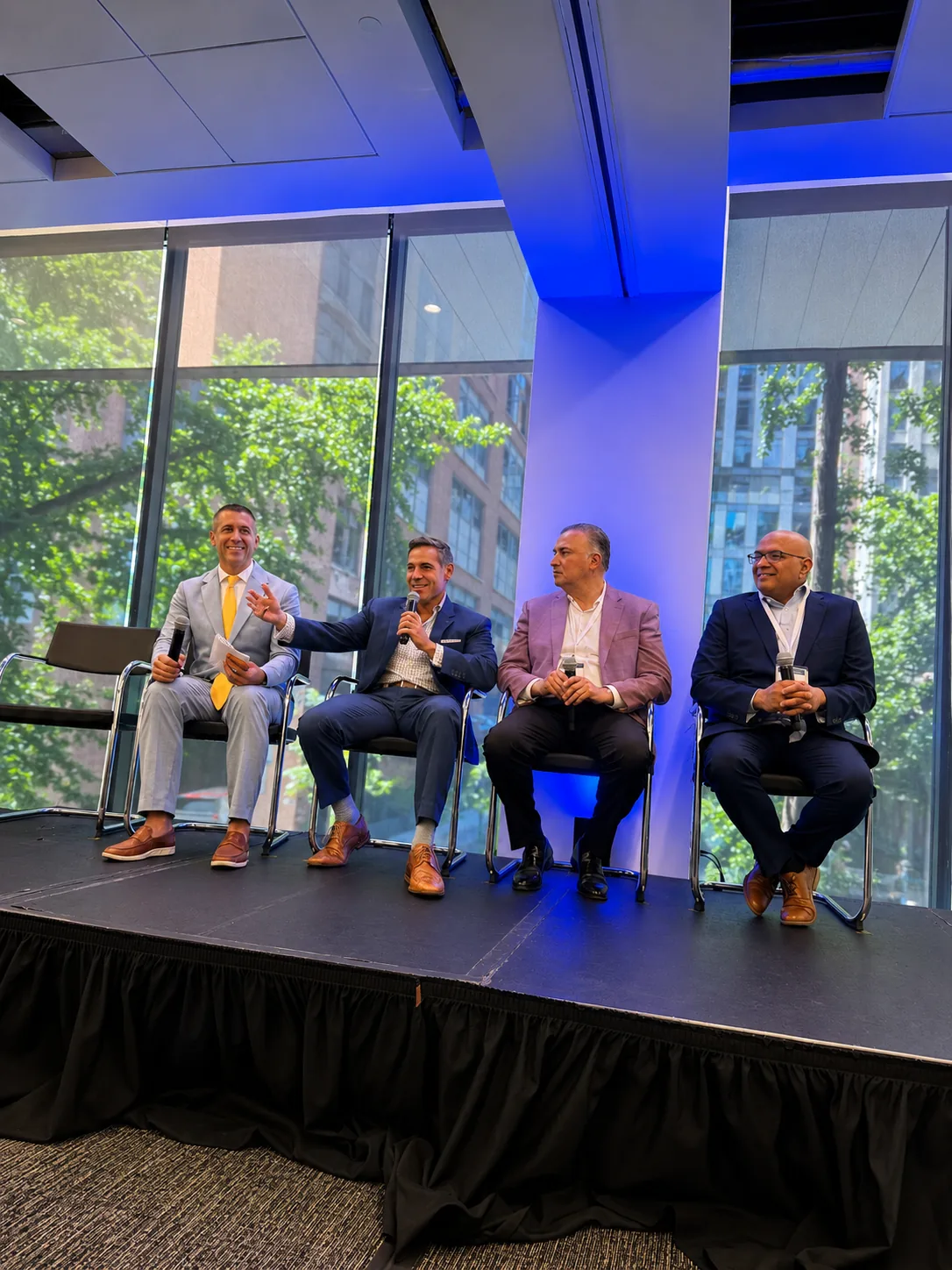
When you review a private placement memorandum or operating agreement, the fee section can seem complicated. A speaker at a Family Office Club event pointed out that a general partner typically earns revenue through three distinct streams.
First, the manager receives returns on their own co-investment. Sponsors often invest equity alongside limited partners, commonly around 10 percent of the total equity in direct real estate or private equity transactions. This capital earns the same baseline return as passive investor money.
Second, the manager collects fees for operational services. These cover the direct work of finding, maintaining, and exiting an asset. Common examples include:
- Acquisition and disposition fees: Charged when buying or selling a property or company, compensating the team for sourcing and transaction execution. For example, a 1 percent acquisition fee on a $50 million asset equals $500,000 paid to the sponsor at closing.
- Asset management fees: Ongoing percentages paid to oversee daily operations, usually calculated on committed capital, invested capital, or net asset value.
- Construction, development, or financing fees: Charges applied when the sponsor manages physical renovations or arranges debt structures.
Third, the sponsor earns a performance incentive, widely known as carried interest or a promote. This structure awards the manager a disproportionate share of the profits once investors receive their capital back alongside a baseline return.
Understanding Carried Interest and the Promote
The promote is designed to reward the sponsor for generating strong results. In a typical private equity or commercial real estate structure, limited partners receive a preferred return first, often between 6 and 8 percent. Once that benchmark is achieved, remaining profits are split according to an agreed ratio, such as 80 percent to limited partners and 20 percent to the general partner.
In his book on capital raising and private equity, Richard C. Wilson writes about how performance fees make up a substantial share of a private fund manager's earnings. Because these profits represent long-term rewards for risk and execution, sponsors view them as their primary incentive.
To evaluate whether a proposed promote structure aligns with your goals, review what is a sponsor promote and is it fair? before committing your capital.
Upfront, Ongoing, and Hidden Costs
Beyond baseline management charges, private offerings can carry operational expenses that reduce your overall return. These costs are often paid out of the fund rather than billed directly to you.
| Fee Type | Typical Range | What It Covers |
|---|---|---|
| Acquisition Fee | 0.5% to 2.0% of purchase price | Sourcing, diligence, and closing transaction costs |
| Asset Management Fee | 1.0% to 2.0% annually | Portfolio operations, reporting, and team overhead |
| Carried Interest / Promote | 15% to 20% of net profits | Performance incentive after the hurdle rate is met |
| Capital Event Fee | 0.5% to 1.0% of transaction | Refinancing or sale execution work |
At a Family Office Club workshop, Richard C. Wilson discussed fee transparency and noted that some sponsors choose to document specific deal costs inside the data room with receipts, passing through exact expenses rather than taking excessive management margins. Looking for this level of clear reporting helps you avoid deals where a manager profits heavily from setup fees before creating real value.
To identify potential warning signs in offering documents, review our guide on private deal red flags every investor can spot.
How Investor Stage Affects Fee Sensitivity
Different investors experience the impact of private fees in different ways, depending on their wealth stage and timeline.
First-Time Accredited Investors
If you recently qualified under the individual income threshold of $200,000 (or $300,000 joint) or the $1,000,000 net worth standard excluding your primary home, private fee sheets may feel foreign. You might be accustomed to index funds with tiny expense ratios. In private markets, higher fees are standard because managers actively operate businesses or real estate, but you must ensure the sponsor is not charging heavy overhead before delivering returns.
Retirees and Pre-Retirees
Investors prioritizing steady cash flow should pay close attention to where management fees sit in the payment waterfall. If ongoing asset fees are paid before cash distributions to investors, your income stream can dry up during lean operational quarters. Checking whether preferred returns are cumulative and compounded helps protect your retirement cash flow.
Seasoned Investors and Family Offices
Experienced allocators frequently look at the relationship between sponsor co-investment and total fee revenue. When a sponsor makes more money from upfront transaction fees than they have at risk in their own equity stake, alignment weakens. High-volume investors often negotiate reduced fee tiers or side letters that tie management compensation directly to performance milestones.
You can organize your diligence process with our private investment fee review checklist.
Capital Timing and Net Return Calculations
Private deal performance is measured differently than liquid markets. Private fund managers evaluate outcomes using the internal rate of return, equity multiples, and distribution timing.
When fees are charged on committed capital rather than deployed capital, your early net returns will reflect a drag while funds wait to be invested. Similarly, transaction costs paid on asset purchases increase the basis of the investment, requiring higher exit valuations to reach target hurdles.
If a fund utilizes capital calls across multiple years, planning your cash reserves prevents unexpected liquidity stress when fees and investment tranches are drawn down. Evaluating these schedules ahead of time keeps your portfolio running smoothly.
Frequently asked questions
What is the difference between a management fee and carried interest?
A management fee is an ongoing operational charge paid to the manager regardless of performance to cover administrative and overhead expenses. Carried interest is a share of net profits earned by the sponsor only after the deal clears a defined profit hurdle for investors.
Are private fund managers allowed to charge performance fees to any investor?
Under federal rules, registered investment advisers charging performance fees must ensure individual investors meet qualified client thresholds, which include having at least $1,400,000 under management with the adviser or a joint net worth exceeding $2,700,000. Exempt managers operating under private placement rules structure these incentives as partnership profit allocations.
Why do sponsors charge acquisition fees in real estate deals?
Sponsors charge acquisition fees to cover the overhead, analysis, and execution costs involved in sourcing and closing a transaction. In many deals, this fee compensates the deal team for months of work required to secure the property.
Related reading
- SPVs and Single-Deal Vehicles Explained
- Distribution Waterfalls Explained Step by Step
- Private Deal Red Flag Checklist
- Capital Calls Explained for New LPs
- Conflicts of Interest in Private Deals
- Accredited Investor Test Calculator
This site is built from over 19 years of Family Office Club workshops, bootcamps, masterminds and investor events. The club has 17 million registered LinkedIn group members, 19 million social media followers in total, 345 events held and $1B in transactions completed between our members.
Sources
- Family Office Club investor event
- Private Equity, a book by Richard C. Wilson
- Family Office Club workshop
- SEC Rule 501(a), definition of accredited investor (eCFR)
- SEC: Accredited investors
- SEC Rule 205-3, qualified client (eCFR)
